
1911 Triggers Explained: Trigger Pull, Trigger Jobs and Drop-In Kits
How a 1911 trigger works, what a trigger job actually changes, flat vs curved triggers, drop-in kits, and the right pull weight for carry, range and competition.
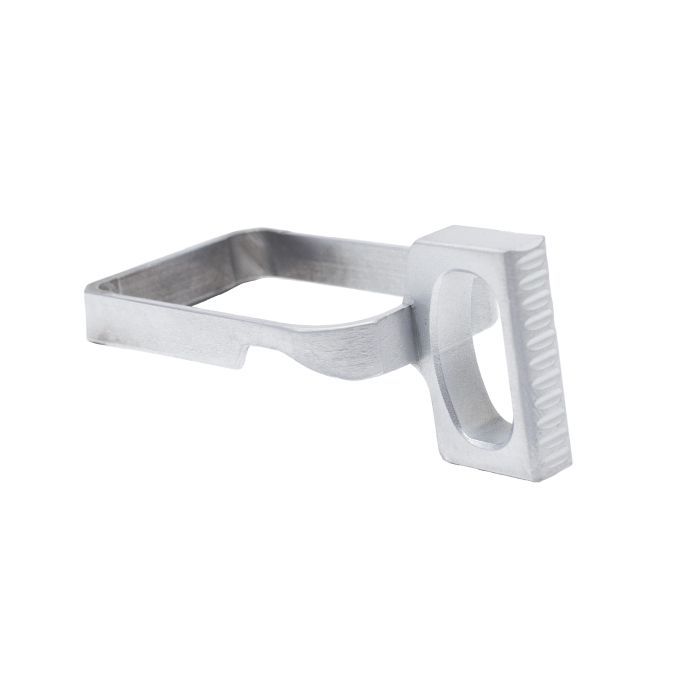
How does a 1911 trigger work?
A 1911 uses a single-action trigger that slides straight back, not a pivoting trigger like most modern pistols. The trigger is a small bow-shaped part that rides inside the frame. As it moves rearward it pushes the disconnector, which pushes the sear, which releases the already-cocked hammer.
Because the trigger only has to release the hammer, not cock it, the 1911 delivers the short, crisp break that shooters have loved for over a century. That same simplicity is why the XP PRO V2 and XP 3C keep the classic 1911 fire control inside a double-stack frame.
What is a 1911 trigger job?
A trigger job is precision gunsmithing that refines how the hammer releases. A gunsmith hones the engagement surfaces between the sear and the hammer hooks so the trigger breaks cleanly and consistently, then tunes the springs. A good trigger job improves:
- Creep: the gritty movement you feel before the break
- Overtravel: how far the trigger keeps moving after the hammer falls
- Consistency: every pull feels the same
- Reset: a short, positive reset for faster follow-up shots
This is not a DIY weekend project with a file. Sear and hammer engagement directly controls whether the pistol is drop-safe and whether it can double. Our action work service includes a full safety check after every trigger job.
Flat trigger vs curved trigger
The trigger shoe is the part your finger touches. It does not change the mechanical function of the pistol, only the feel.
- Curved triggers have the traditional concave face that guides your finger to the same spot every time.
- Flat triggers present a straight vertical face. Many shooters find they place their finger lower and pull straighter, and they suit the modern look of a 2011.
Hand size and personal preference decide this one. Our one-piece flat skeletonized XP PRO trigger is a direct swap for XP PRO, XP COMP and XP 3C pistols.
What is a drop-in trigger kit?
A drop-in trigger kit is a matched set of fire control parts built to work together: trigger, hammer, sear, disconnector and springs. Instead of mixing a new trigger with worn factory internals, the kit gives you a coordinated system.
The name suggests you just drop it in. In practice the parts still need to be fitted, and the pistol needs a function and safety check before it goes back in a holster.
What trigger pull weight should a 1911 have?
It depends on what the pistol is for:
| Use | Typical pull | Why |
|---|---|---|
| Carry / defensive | 4 to 5 lb | Deliberate, safe under stress and with gloves |
| Range / general | 3.5 to 4.5 lb | Comfortable and consistent |
| Competition | 2.5 to 3.5 lb | Precision on a dedicated range gun |
Rather than chasing a number, talk to a gunsmith about how you use the pistol. We can set a pull weight, verify sear engagement and confirm the pistol is safe before it ships back.
Upgrade paths
- Browse 1911 triggers and 1911 trigger kits.
- Own an XP or XF? See XP PRO parts and XF PRO parts.
- Want it done right the first time? Request a service quote for action work.
Frequently asked questions
What is a good trigger pull weight for a carry 1911?
Most gunsmiths recommend a deliberate pull in the 4 to 5 pound range for a defensive 1911. Competition guns on the range often run lighter, but a carry gun should never be set up so light that stress or a glove can trip it.
Can I install a drop-in 1911 trigger kit myself?
The trigger shoe itself is simple, but the hammer and sear engagement controls whether the pistol is safe. Have the kit fitted and function-checked by a gunsmith, or send it to our shop.
Does a flat trigger change the pull weight?
No. Flat and curved shoes change where your finger sits and how the break feels, not the mechanical weight, which is set by the sear, hammer hooks and springs.